Call Us +44 (0)1686 611200
Proudly Made in the United Kingdom

The Ultimate Guide to Forklift Downtime
By Jason Cadman on June 18, 2026
How to Reduce Attachment-Related Downtime, Improve Uptime, and Protect Productivity
Forklift downtime is one of the biggest hidden costs in warehouse, logistics, manufacturing and materials handling operations.
When a forklift is out of service, productivity slows, deliveries can be delayed, and costs quickly begin to rise. While many businesses focus on maintaining the truck itself, its attachments are often overlooked — even though they play a critical role in day-to-day handling operations.
Whether it's a lifting jib, drum handler, wide load handler, tipping skip, or bespoke attachment, unexpected equipment failure can bring critical handling processes to a standstill.
The good news? Most attachment-related downtime is preventable.
We’ve put together this guide to share some of the most common causes of downtime, the warning signs operators should look for, and the practical steps businesses can take to keep their fleets productive and their operations moving.
1 The Real Cost of Forklift Downtime
The impact of downtime goes far beyond the cost of repairing or replacing a failed attachment. It can result in:
- Lost productivity
- Delayed dispatches and deliveries
- Missed production targets
- Overtime costs
- Temporary equipment hire
- Increased health and safety risks
- Customer service issues
In many operations, the failure of a single attachment can disrupt multiple parts of the business, from production and storage through to inspection and dispatch.
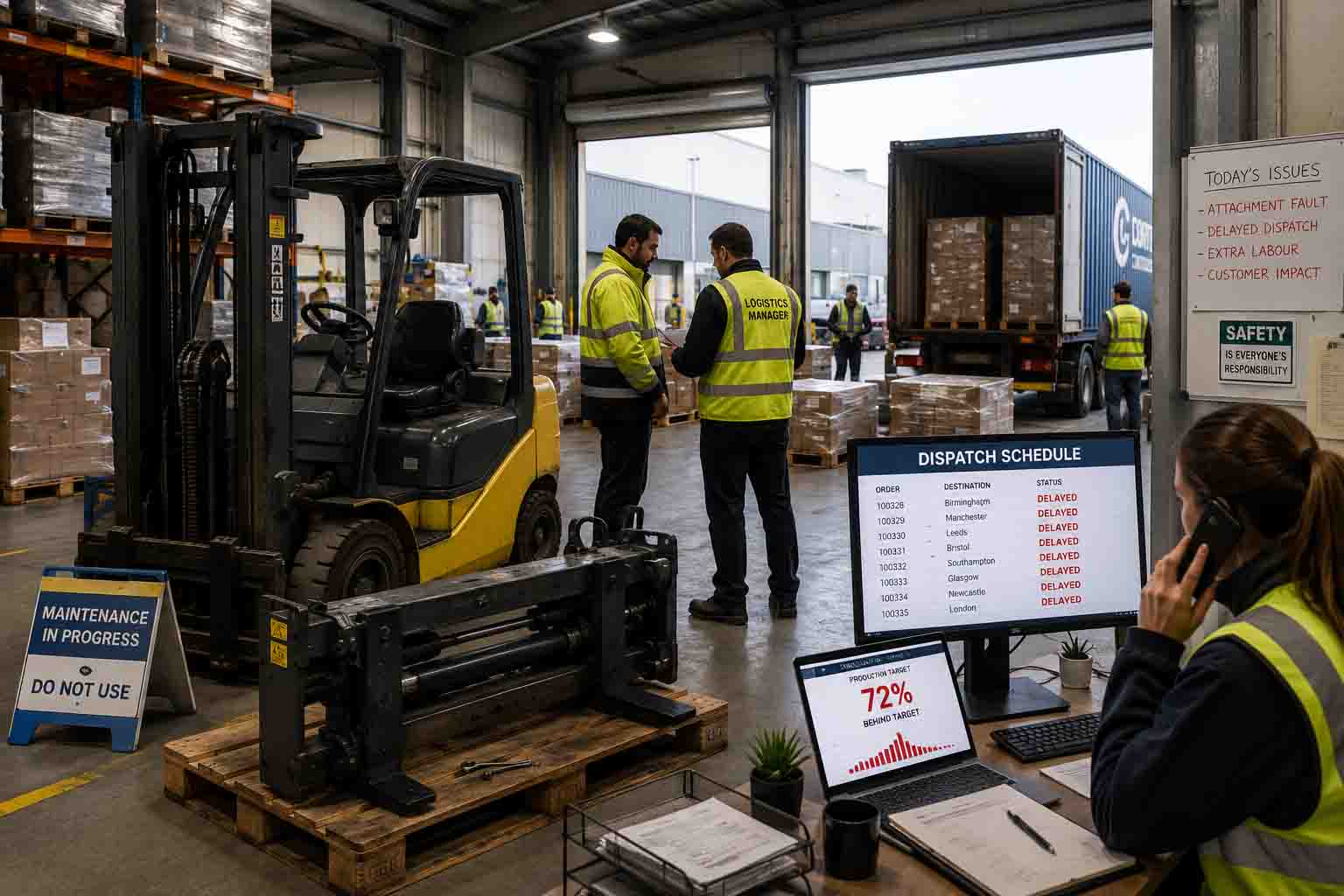
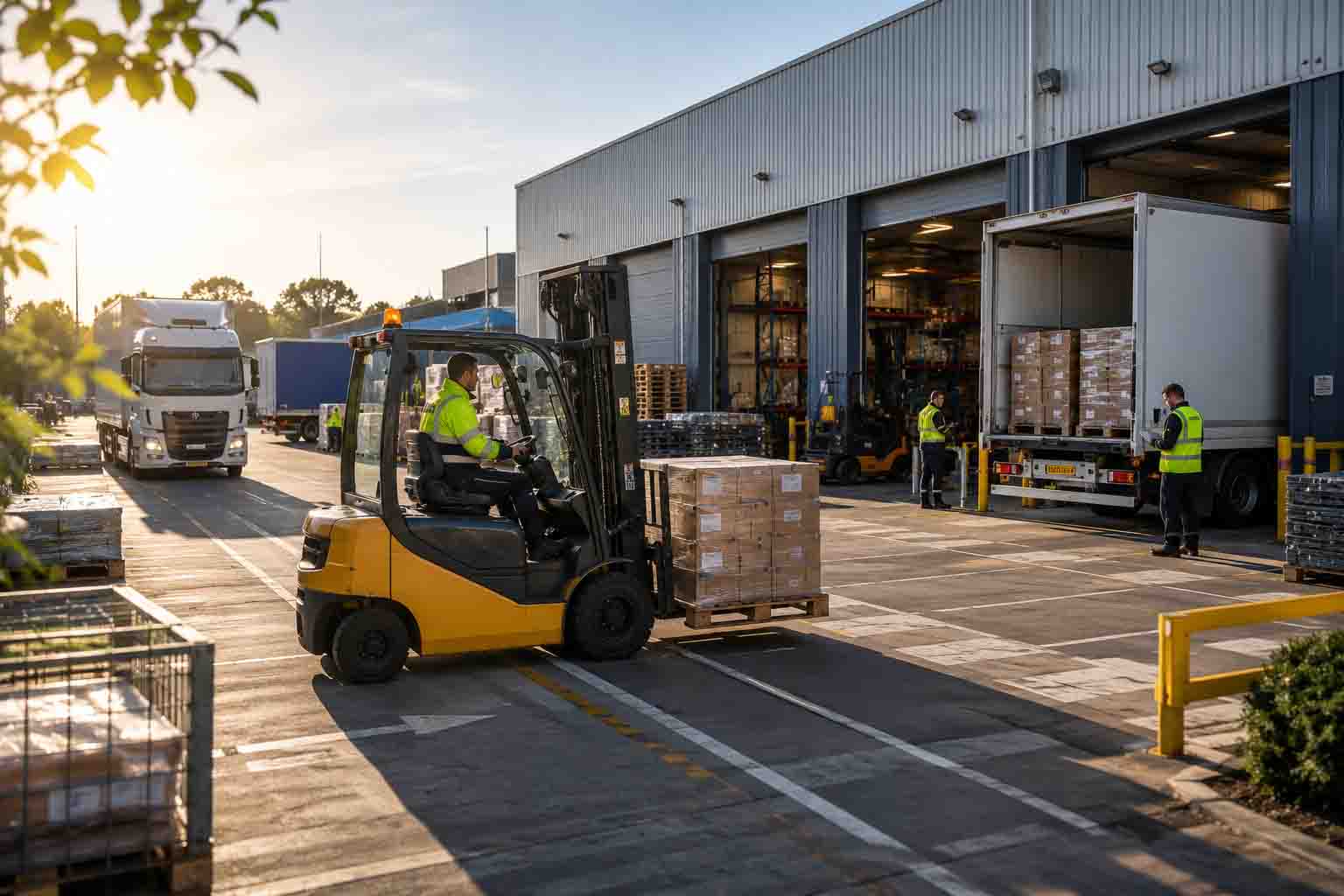
Attachment failure can quickly affect productivity, dispatch schedules and safety.
2 The Most Common Causes of Attachment-Related Downtime
Understanding why attachments fail is the first step towards preventing costly interruptions.
Hydraulic Failures
Hydraulic systems are critical to the operation of many forklift attachments.
- Damaged hydraulic hoses
- Worn seals and cylinders
- Contaminated hydraulic oil
- Incorrect operating pressures
- Poor maintenance practices
Warning signs may include oil leaks, slower operating speeds, reduced clamping force, jerky movements or inconsistent performance. Left unchecked, minor hydraulic issues can quickly develop into serious problems.
Impact Damage
Attachments regularly operate in busy environments where accidental impact can occur.
- Collisions with racking
- Impacts with trailers and loading bays
- Poor visibility
- Operator error
- Incorrect attachment positioning
Even relatively minor impacts can result in:
- Bent arms or frames
- Distorted components
- Misalignment
- Premature wear
- Reduced lifting performance
Wear and Tear
Every forklift attachment experiences wear throughout its life. Components commonly affected include bearings, wear pads, chains, pivot points and rollers.
Because wear occurs gradually, problems are often overlooked until performance begins to deteriorate. Routine inspections help identify wear before it causes operational disruption.
Incorrect Application
Using an attachment for a task it was not designed to perform places unnecessary stress on both the attachment and the forklift itself.
- Exceeding rated capacities
- Handling unsuitable loads
- Operating in unsuitable environments
- Using attachments more intensively or frequently than they were designed for
Choosing the correct attachment for each application is one of the most effective ways to improve reliability and reduce downtime.
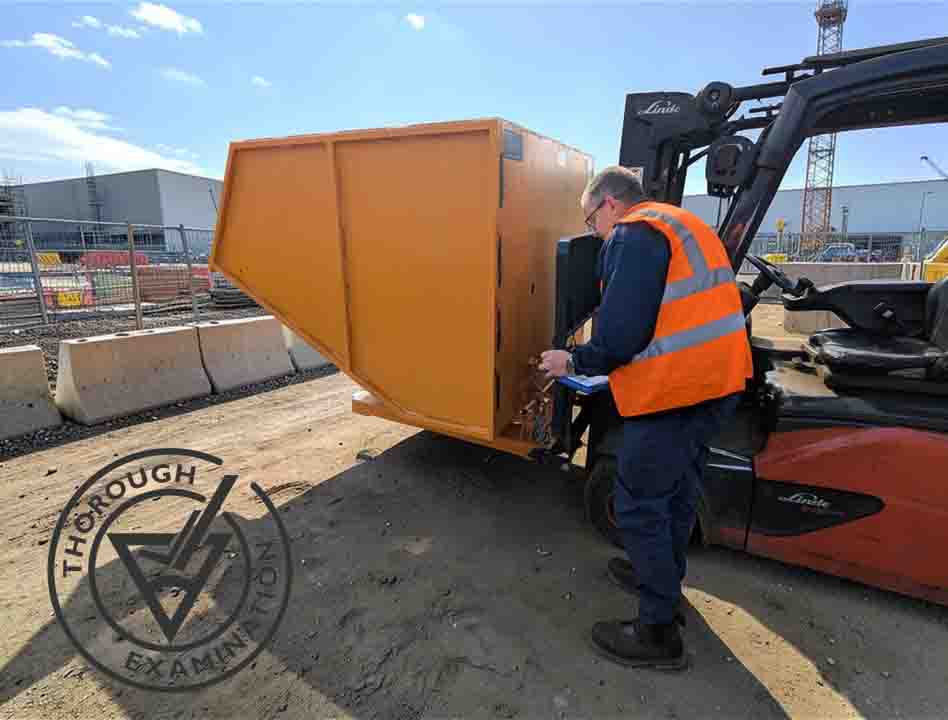
Regular inspection helps identify hydraulic issues, impact damage and wear before downtime occurs.
3 Early Warning Signs Operators Should Never Ignore
Operators are often the first people to spot potential issues. Recognising early warning signs allows problems to be addressed before they turn into serious failures.
Warning Signs Checklist
Hydraulic: oil leaks, reduced clamping force, slow operation, unusual noises
Structural: cracks, bent components, distorted frames, corrosion, loose mountings
Operational: reduced responsiveness, increased cycle times, unexpected movement or difficulty positioning loads
4 Why Preventive Maintenance Always Costs Less
Many businesses still rely on a reactive maintenance strategy, only addressing issues once equipment has failed. This approach typically leads to higher costs and increased downtime.
A preventive maintenance programme helps businesses:
- Identify issues early
- Reduce the need for emergency repairs
- Extend equipment life
- Enhance safety
- Improve productivity
- Reduce overall maintenance costs
The most successful operations combine daily operator checks, planned maintenance and periodic Thorough Examination to identify issues before they affect performance.

Preventive maintenance is almost always less costly than emergency downtime.
5 Why Spare Parts Availability Matters
When an attachment fails, the time it takes to get equipment back up and running often depends on one key factor: access to spare parts.
Common causes of extended downtime include:
- Overseas supply chains
- Long manufacturing lead times
- Customs delays
- Obsolete components
- Limited distributor stock
For many businesses, the cost of waiting for parts often exceeds the cost of the parts themselves. Spare parts support should therefore be considered just as carefully as the initial purchase price of the attachment.
6 The Advantage of UK Manufacturing
Supply chain resilience has become increasingly important for forklift operators. Attachments manufactured overseas often involve longer lead times for both new equipment and replacement parts.
UK manufacturing offers several advantages:
- Faster access to spare parts
- Reduced lead times
- Faster repairs and refurbishment
- Direct access to technical expertise
- Easier communication
- Greater flexibility for modifications and bespoke solutions
When downtime occurs, having local manufacturing and engineering support can significantly reduce disruption.
7 Choosing Attachments That Reduce Downtime
Attachment suppliers can vary significantly in the quality of their products, support and aftersales service. When comparing options, businesses should consider:
Build Quality | Durable construction, quality materials and proven engineering all help reduce the risk of failure.
Parts Availability | Ready access to spare parts can significantly reduce downtime when repairs are required.
Service Support | Experienced engineers and responsive technical support help resolve issues quickly and efficiently.
Documentation and Compliance | Clear documentation supports safe operation, ongoing maintenance and inspection planning throughout the attachment’s lifecycle.
A lower purchase price does not always deliver the best long-term value if it results in higher downtime or maintenance costs.
8 Reducing Downtime Starts with Prevention
Most attachment-related downtime does not happen without warning. Regular inspections, preventive maintenance, operator awareness and easy access to spare parts can dramatically reduce disruption and improve productivity.
By taking a proactive approach, businesses can extend equipment life, improve safety and maintain operational performance throughout the year.
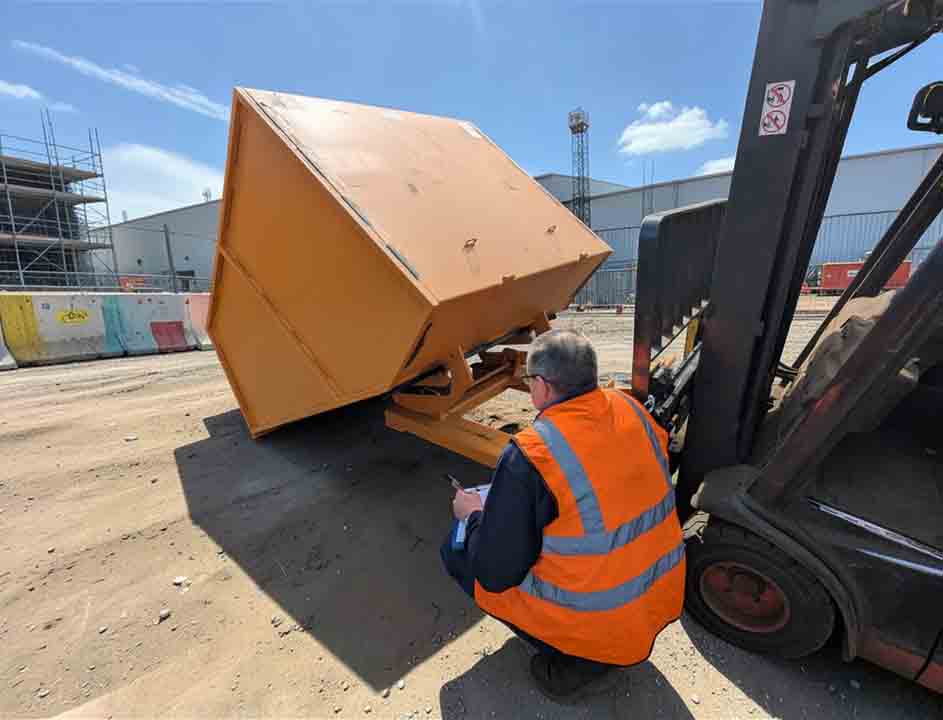
Reliable parts availability and UK manufacturing support help keep operations moving.
9 How Contact Attachments Can Help
With more than 50 years of UK manufacturing and engineering expertise, we’re proud to support businesses to minimise downtime and maximise productivity.
We provide:
- UK-manufactured forklift attachments
- Spare parts and replacement components
- Repairs and refurbishment services
- Technical support and engineering advice
- Bespoke attachment solutions
- Thorough Examination services
- Long-term product support
Whether you're looking to improve reliability, reduce downtime or review your current attachment fleet, our team is here to help.
Call us on 01686 611200 or visit www.forklift-attachments.co.uk to discuss your requirements.