Call Us +44 (0)1686 611200
Proudly Made in the United Kingdom

The Forklift Attachment Safety Guide LOLER, PUWER & UKCA/CE Compliance – What Operators Really Need to Know
By Jason Cadman on June 03, 2026
Forklift attachments work hard behind the scenes. They lift, clamp, push, rotate and carry thousands of loads every week — often in demanding, high-pressure environments. And because they interact directly with people, products and equipment, they come with clear legal responsibilities that every operator and safety manager needs to understand.
The good news? Compliance isn’t complicated once you know what to look for. LOLER, PUWER and UKCA/CE marking together set out exactly what’s required: how attachments should be examined, what documentation must be in place, and how to keep equipment safe and legally compliant throughout its working life.
Whether you’re running a warehouse, cold store, construction site, or manufacturing facility, the principles are the same. Getting this right protects your people, your equipment and your business.
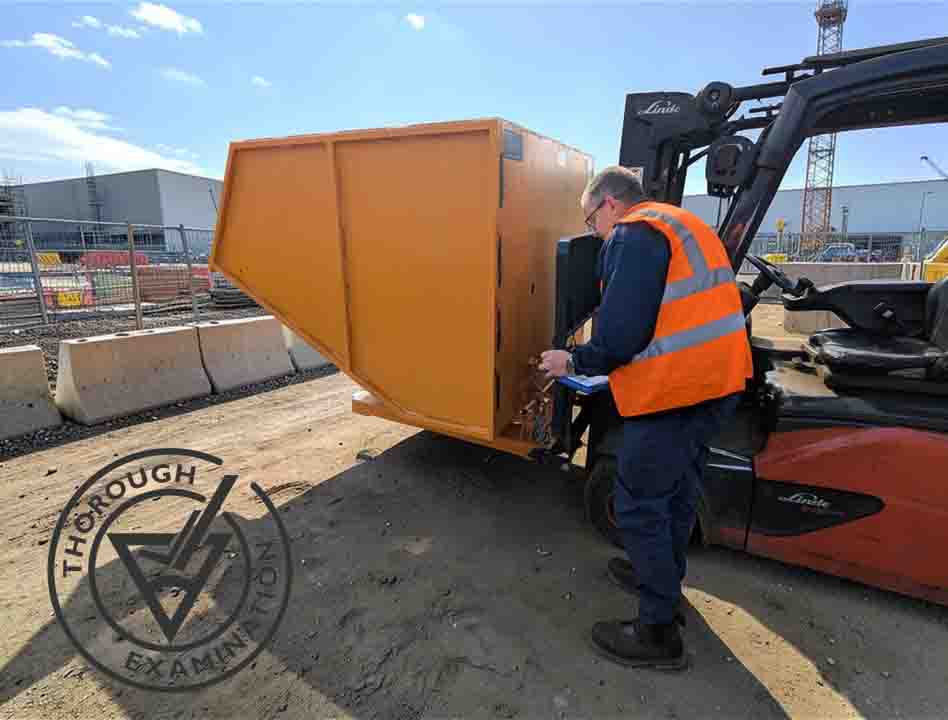
Regular inspections and compliance checks help keep forklift attachments safe and legally compliant.
1 What the Law Actually Requires
Forklift attachments are governed by a combination of LOLER, PUWER and UKCA/CE marking requirements. Each plays a different role in ensuring equipment is safe, suitable and legally compliant.
LOLER 1998 | Lifting Operations and Lifting Equipment Regulations
LOLER covers any equipment used to lift or lower loads, which includes most forklift attachments. Under LOLER, attachments must be:
- Thoroughly examined by a competent, independent person — typically every 6 months for all lifting attachments
- Clearly marked with their Safe Working Load (SWL)
- Supported by written reports, with every Thorough Examination report kept on file
- Removed from service immediately if a defect poses an imminent risk
PUWER 1998 | Provision and Use of Work Equipment Regulations
PUWER applies to all work equipment and focuses on suitability, condition and operator competence. Under PUWER, attachments must be:
- Suitable for the specific task and environment
- Maintained in safe working order, with comprehensive records kept
- Inspected where risk demands it
- Used only by trained, authorised operators
UKCA/CE Marking | Proof of Legal Compliance
Before an attachment can be placed on the UK market, it must carry a valid UKCA or CE mark. This confirms the attachment has been designed, tested and documented in line with the Machinery Regulations. Every attachment must also come with a Declaration of Conformity.
2 What a Thorough Examination Really Involves
Thorough Examination is not a service, quick visual check, or maintenance inspection. It is a formal legal examination carried out by someone with the technical competence and independence to assess the attachment against its design intent.
- Structural checks — forks, frames, mountings, welds and high-stress areas
- Verification of Safe Working Load (SWL) markings
- Assessment of wear against manufacturer tolerances
- Review of previous reports to identify deterioration trends
- Hydraulic checks — seals, hoses, rams and connections
- Testing of safety-critical components including locking pins, catches and chain tensioners
- Assessment of suitability for the environment and application
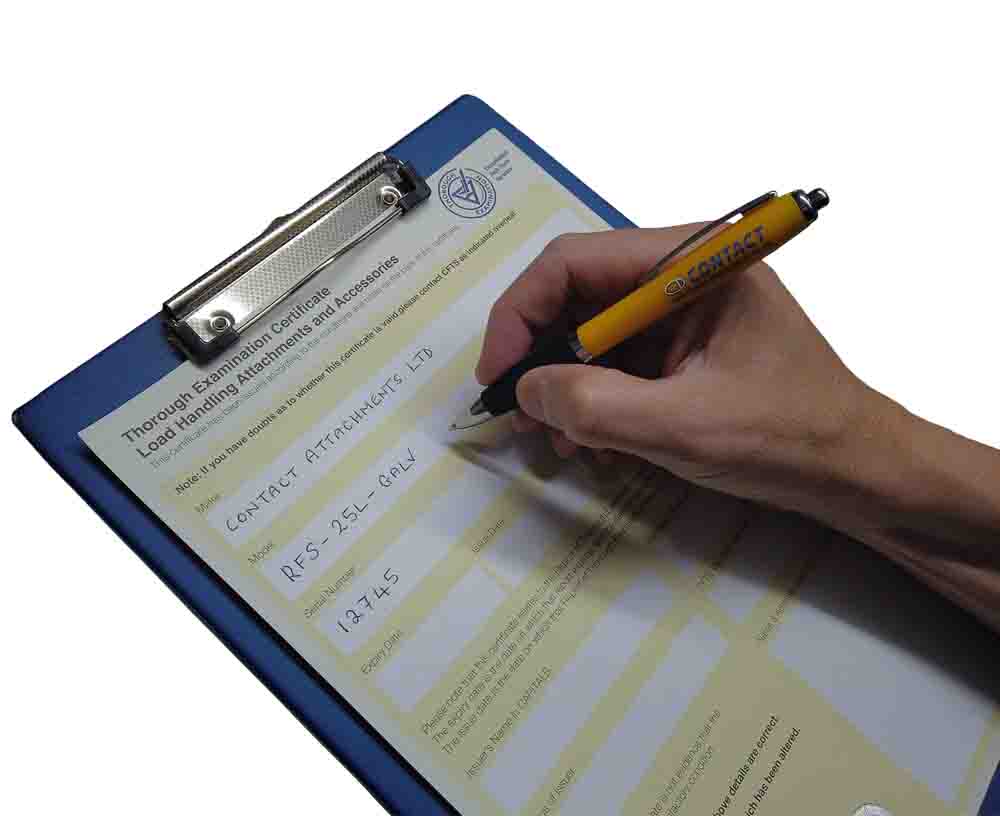
A Thorough Examination assesses structural integrity, hydraulic systems and safety-critical components.
3 Documentation You Must Keep
Strong compliance relies on strong paperwork. If the HSE, an auditor or your insurer asks for evidence, you must be able to produce it quickly.
From Point of Sale
- Declaration of Conformity
- UKCA/CE marking evidence
- Operating and maintenance instructions
- Load rating plate or label
- Derating calculation, where the attachment affects truck capacity
Ongoing Records
- All Thorough Examination reports
- PUWER inspection records
- Maintenance and service logs
- Defect reports and corrective actions
- Operator training and authorisation records
Quick Compliance Checklist
✓ Declaration of Conformity available
✓ UKCA / CE marking present
✓ Thorough Examination in date
✓ SWL clearly visible
✓ Operators trained and authorised
✓ Maintenance records up to date
4 How Often Inspections Need to Happen
LOLER Thorough Examination
- Every six months for all lifting attachments
- Every six months for attachments lifting people or suspended loads
- After significant repair, modification or incident
PUWER Inspections
Frequency depends on:
- Intensity of use
- Environment, including impact, moisture, chemicals and temperature extremes
- Risk profile
Operators should also carry out daily pre-use checks at the start of every shift. This is one of the most effective ways to catch early signs of wear before they become a potential safety risk.
5 Spotting Early Signs of Wear
Operators are your first line of defence. Daily checks should look for:
Forks and Blades
- Blade wear approaching 90% of original thickness
- Tip misalignment greater than 3% of blade length
- Cracks at the heel or shank
- Bends or twists, however minor
Corrosion
- Rust, pitting or scaling — especially in cold, wet or corrosive environments
Chains, Linkages and Hydraulics
- Chain elongation, stiff links or cracked plates
- Oil seepage from cylinders or hoses
- Missing or loose bolts, pins or catches
Unusual Behaviour
Grinding, drifting, unexpected movement or changes in responsiveness should always be investigated.
6 What Good Compliance Evidence Looks Like
If an auditor or inspector reviews your attachments, they want to see:
- In-date Thorough Examinations by a competent, independent examiner
- Defects identified and remedial action scheduled
- Attachments used within their rated capacity
- Updated load plates where derating applies
- Trained, authorised operators
- Complete purchase documentation and traceability
- Maintenance carried out in line with manufacturer requirements
If any of these elements are missing, a compliance review should be treated as a priority.

Good maintenance, documentation and operator training form the foundation of forklift attachment compliance.
7 How Contact Attachments Can Support You
With more than 50 years of UK manufacturing and engineering expertise, we help forklift truck operators keep their attachments safe, compliant and productive.
We provide:
- CFTS-accredited Thorough Examination
- Certification and documentation, including Declarations of Conformity and derating calculations
- Spare parts, repairs and refurbishment
- Compliance guidance, including scheduling, documentation and inspection planning
- Bespoke and modified designs for specialist applications
If you’d like to review your current attachments or discuss your compliance requirements, our team is here to help.
Get in touch on 01686 611200 or email [email protected].